Why Life Feels Boring After Quitting Alcohol

Drinking did not make my life exciting. It made the same life easier to repeat. I went to the same places, met the same people and had versions of the same conversation. Sometimes the night was good, sometimes it ended badly, but most of the time nothing particularly memorable happened.
Alcohol made that repetition feel like a plan. I did not have to decide what to do on Friday because I already knew. I did not have to ask whether I actually enjoyed the people around me because we were drinking together, and for a long time that felt like enough.
Then I stopped drinking and Friday still arrived, but the plan was gone. There were suddenly long evenings with nowhere to go, no quick reward waiting for me and no clear idea of what a sober person was supposed to do with all that time.
That is when many people begin to think sobriety is boring. I do not think boredom tells the whole story. It feels more like losing a set of instructions you had been following for years.
Alcohol Was Doing More Than Filling Your Glass
Drinking may have been your reward after work, your answer to stress and your entire plan for the weekend. It helped you start conversations, celebrate good news and avoid thinking about bad news. Even when you were not drinking, you could be anticipating the next night or recovering from the previous one.
When alcohol is removed, all of those empty spaces become visible at once. You think you are removing one behaviour, but you soon discover that drinking had become connected to your routines, relationships and understanding of who you were.
The National Institute on Alcohol Abuse and Alcoholism explains that alcohol affects brain systems involved in reward. As drinking patterns are repeated, the behaviour can gradually become more automatic and less connected to a conscious decision.
In normal language, you repeat the same life for long enough and eventually it begins to feel like the natural shape of your life.
This is why a walk, a quiet dinner or ten pages of a book can initially feel painfully ordinary. They cannot produce the immediate intensity your mind learned to expect from alcohol. That does not mean sober life has nothing to offer, but it may take time before normal experiences begin to feel rewarding again.
Repetition Is Not the Same as a Full Life
Looking back, was every drinking night really a new adventure? Or was it mostly the same pattern happening in different rooms?
The first hour may have felt exciting. You remember the anticipation, the first drink and the feeling that the night could go anywhere. You are less likely to remember the complete cost when your mind starts telling you that drinking was better.
The complete experience included the money spent, the sleep destroyed, the plans cancelled and the next day sacrificed. It included conversations you barely remembered and promises you had already made many times before. For some of us, it also included hiding how much we drank and pretending we were still in control.
When people miss alcohol, they often compare the dullest sober evening with the best thirty minutes drinking ever gave them. That is not an honest comparison. If you want to compare drinking with sobriety, you have to compare the whole life.
Alcohol made my world smaller without making it feel small. The same bars, people and conversations seemed like enough because the drink itself provided the intensity. Once it was removed, I had to face how little was actually happening underneath it.
The Empty Period After Quitting
The first part of sobriety can be underwhelming. People talk about waking up clear, saving money and finally feeling free, but they do not always mention the evenings when nothing seems interesting.
You can stop drinking and still feel restless, lonely or disappointed with your life. The problems you were avoiding do not disappear because you made one good decision. In some cases, you notice them more clearly because you no longer have an easy way to leave yourself for the evening.
I expected quitting to feel like moving into a new life. Instead, there was a period when it felt as though I had walked out of the old one and had nowhere else to go. The old routine was gone, but nothing meaningful had replaced it yet.
Some evenings, all I did was not drink. At the time, that did not feel like progress, but it was. I was allowing the old pattern to end without immediately knowing what would come next.
There is pressure in recovery to fill every free hour with training, reading, meditation and self improvement. Those things can help, but you do not need to turn into a different person within a month. Sometimes you need to learn that an ordinary evening is not an emergency.
Boredom will not destroy you. Another night of drinking might.
How My World Started Growing Again
I am now approaching two years without alcohol. Sobriety did not make me disciplined every day, remove every bad habit or give me a clear answer about what I should do with my life.
I still waste time. I still make decisions I regret and compare myself with people who appear to be further ahead. There have been projects that failed, ideas that went nowhere and days when I did much less than I planned.
The difference is that my days are no longer trapped inside the same loop.
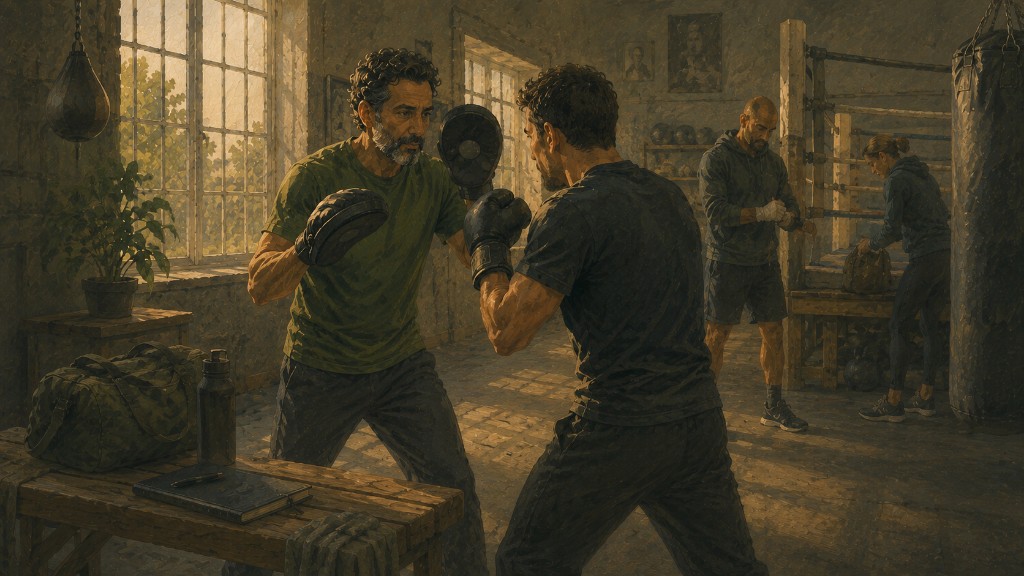
I returned to boxing. I started building projects instead of spending every evening consuming something. Most of those projects did not become successful, but even a failed project left me with more than another forgotten night ever did.
I began learning again and became interested in ideas that had nothing to do with escaping my own head. By my own calculation, I have also kept around thirteen thousand dollars that would previously have disappeared into alcohol, drugs and the decisions surrounding them.
The money matters, but becoming useful again has mattered more.
Heavy drinking gets you used to taking yourself out of service. You are drinking, recovering, hiding something or promising that tomorrow will be different. People learn that they cannot fully depend on you, and eventually you stop depending on yourself.
Sobriety gave me the opportunity to change that relationship slowly. I could keep more of my promises. I could work on something that might still matter the following morning. I could be present when another person needed me.
My world did not suddenly become bigger on the day I quit. It expanded each time I did something the drinking version of me would not have done. A boxing session, an early morning, a completed piece of work or a difficult evening survived without escaping all became part of a life that was no longer organised around alcohol.
When Nothing Feels Interesting
You do not need to find your passion immediately. Start by paying attention to the hours when you used to drink and give those hours somewhere else to go.
A simple plan is better than waiting for inspiration. Training, cooking, walking, seeing family or leaving the house for coffee may not sound life changing. They do not need to be. In the beginning, their purpose may simply be to help you reach the end of the evening without making tomorrow worse.
It also helps to return to things alcohol quietly pushed out of your life. Think about what interested you before every reward became connected to drinking. There may be a sport, skill, place or relationship that you did not consciously abandon. Alcohol simply became more important until there was no room left for it.
Meeting people around an activity can feel different from meeting people in a bar. The activity gives the interaction somewhere to go, even when you are not naturally confident. Alcohol Change UK recommends beginning with smaller sober social experiences instead of using a major party or celebration as your first test.
You do not have to prove that you can spend six hours in a bar without drinking. You can build a social life that does not require you to fight yourself all evening.
There is no universal timeline for enjoying life again. If nothing feels rewarding for a long time, or if the emptiness is accompanied by persistent hopelessness or depression, speak with a mental health professional. Alcohol can cover problems that still need attention after the drinking stops.
Anyone who may be physically dependent on alcohol should also seek medical guidance before suddenly stopping. Alcohol withdrawal can be dangerous, and asking for medical support is not a failure of willpower.
Your Life Is Not Supposed to Stay Empty
Steve O once described sobriety with a simple line: “To stay sober you give up one thing to get everything.”
It may not feel like everything at first. It may feel as though you gave up the one reliable plan you had for Friday night. Stay sober long enough to find out what begins returning when alcohol is no longer making your decisions.
Your mornings return. Your money stays in your account. Your interests begin to reach beyond the next drink. You become more capable of keeping your word and being present in your own life.
The empty space left by alcohol is not your finished sober life. It is only space.
What eventually fills it will depend on what you begin doing with it.
Sources
-
Used in the section “Alcohol Was Doing More Than Filling Your Glass” for information about alcohol, reward processing and the gradual movement of repeated drinking towards habitual behaviour.
-
Alcohol Change UK, Tips for Enjoying a Social Life Without Alcohol
Used in the section “When Nothing Feels Interesting” for its recommendation to begin with smaller sober social experiences rather than testing yourself at a major celebration.
-
Steve O, I’m Grateful My Alcoholism Was Severe
Used in the final section for Steve O’s statement about giving up one thing in sobriety to get everything.
This piece is a reflection, not clinical guidance. Voice of Sobriety does not provide medical advice or treatment.